
If you are someone who wants to start their own company and build new stuff, here is something you must remember:
The goal of business is to make some profit, by selling stuff to customers and providing positive value in the marketplace. The market forces determine the overall worth of your business, based on the universal law of power and supply. And you must never underestimate the power of building something, no matter how juvenile or simple it may be. The effort, and usefulness of the product for a few people, is what matters the most. Even if, let’s say, you pick up random rock and polish it, shine it, make it better, and put it for sale to someone at 10 cents, and if someone decides to buy it, what matters is that you created something valuable from nothing, and someone was willing to pay money for it, a transaction was completed successfully, and real money was now in your pocket! That is what matters the most.
I learnt a lot of things building and running my first unofficial startup back when I was in India, during my undergrad college days. I was very, very passionate about creating something great, something of my own(even though I was still a beginner to coding and computer science in general), that I could market and sell as a product or service to users. My realm was computer science, so I was always thinking of new ideas to build, say, a software app, website, programming tool, or even go so far as to offer software dev services. I was desperate, and it was stemming from weakness, instead of a position of strength as it should always be.
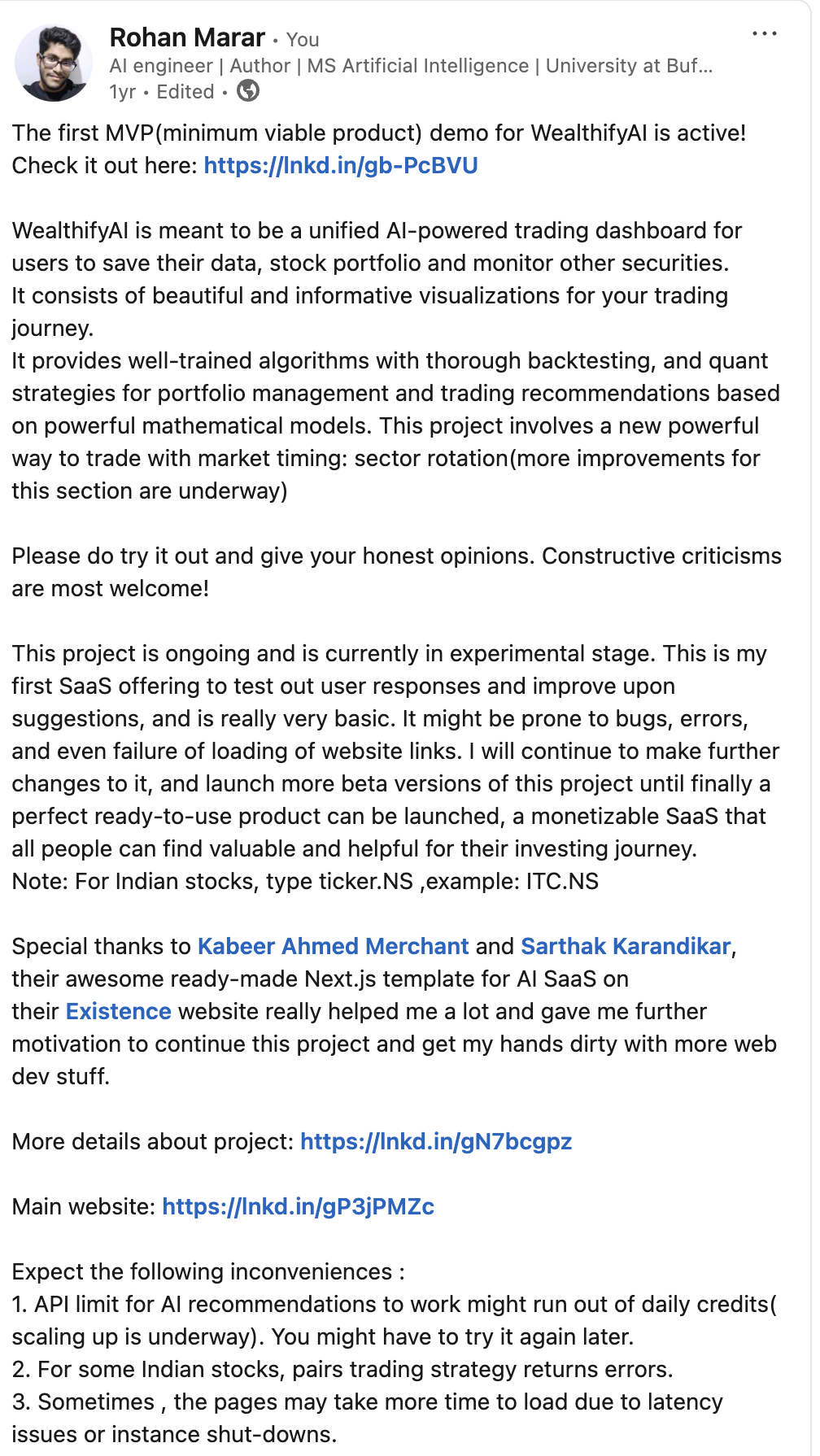
During my 3rd year of undergrad, I began by first deploying a web service as a marketable offering. I built a financial price prediction software as a web service ( a quant powered recommendation engine and price forecaster) named Wealthify. I was able to sell it to few of my friends, and I made 250 rupees in total profit from this project.

Then later on, I proceeded to hire a network of interns under my startup( students who were willing to work for my startup) and assign them modules os tasks to complete. It was mutual benefit for all of us; they got to learn more stuff while working on my projects while I got to delegate tasks which I didn’t like to do ( like coding up a website’s frontend, etc), so I could focus on stuff that actually mattered.
After some months, I collaborated with a classmate of mine and we decided to work together on my startup. We pivoted it, gave it a new name (Tensorbuilds), and our first project together was InfraEdge, a scalable web app hosting service.
Infraedge was where I was hosting my own private PC, which ran 24/7, and exposing it outside my home network, whereby I could offer software services runningon my PC under multiple virtual machines and docker containers.
We had our own Linux servers running 24/7, and we offered developers free access to static and dynamic website hosting, as well as launching and learning containers, virtual machines, networking, and advanced DevOps learning material bundled under our premium plans and post-paid service options.
Basically, it was a cheaper and easier alternative to cloud solutions like AWS, GCP, etc. Developers no longer had to spend time learning about how to deploy services; we did all the heavy-lifting for them.
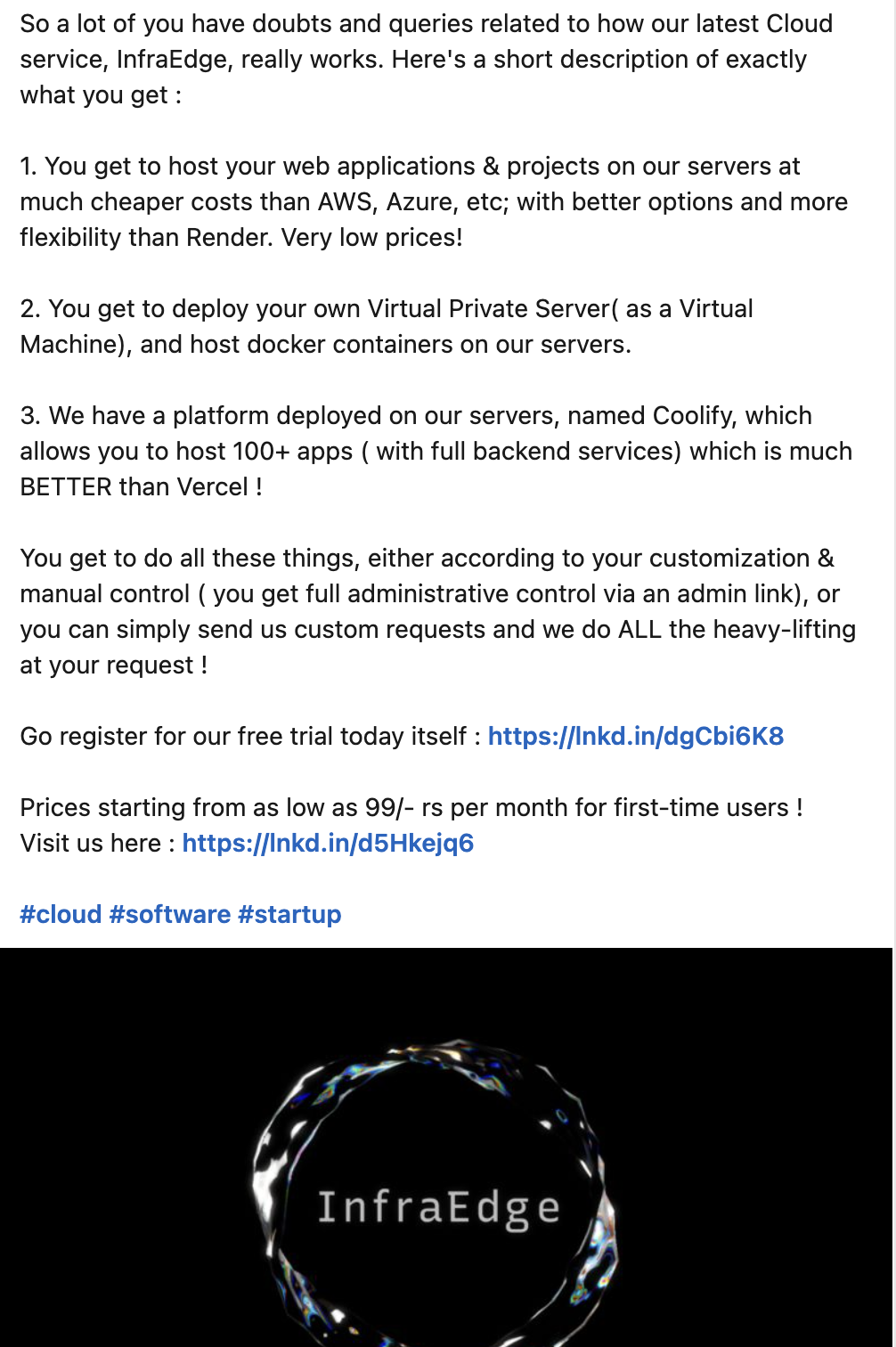
Via this service offering, I helped coders host their own virtual servers, and they could also get access to the software apps I was hosting. One of my friends was able to finish a tough Java Springboot application project thanks to a docker container running on our servers. That made me really happy.
This was when I learned about offering hooks, free trials, more value to customers, and how to market, in order to grab people’s attention.
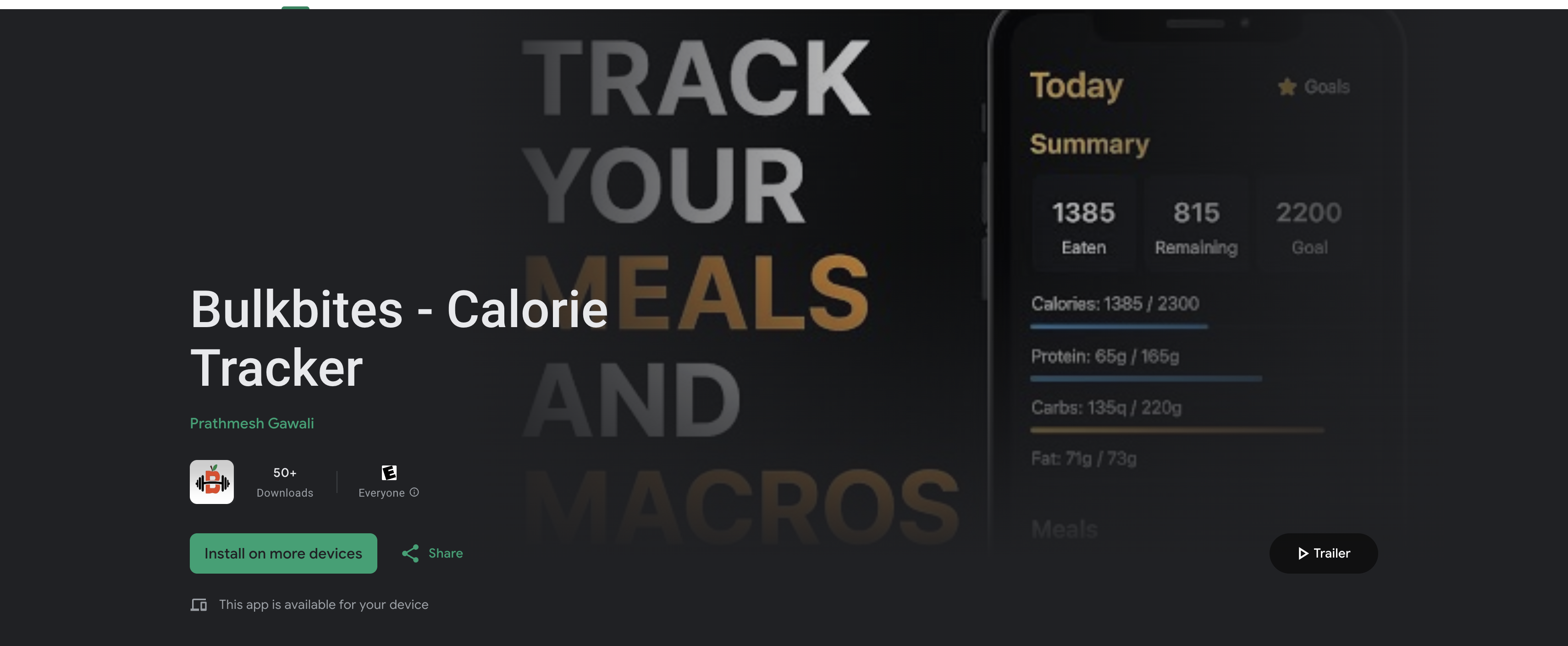
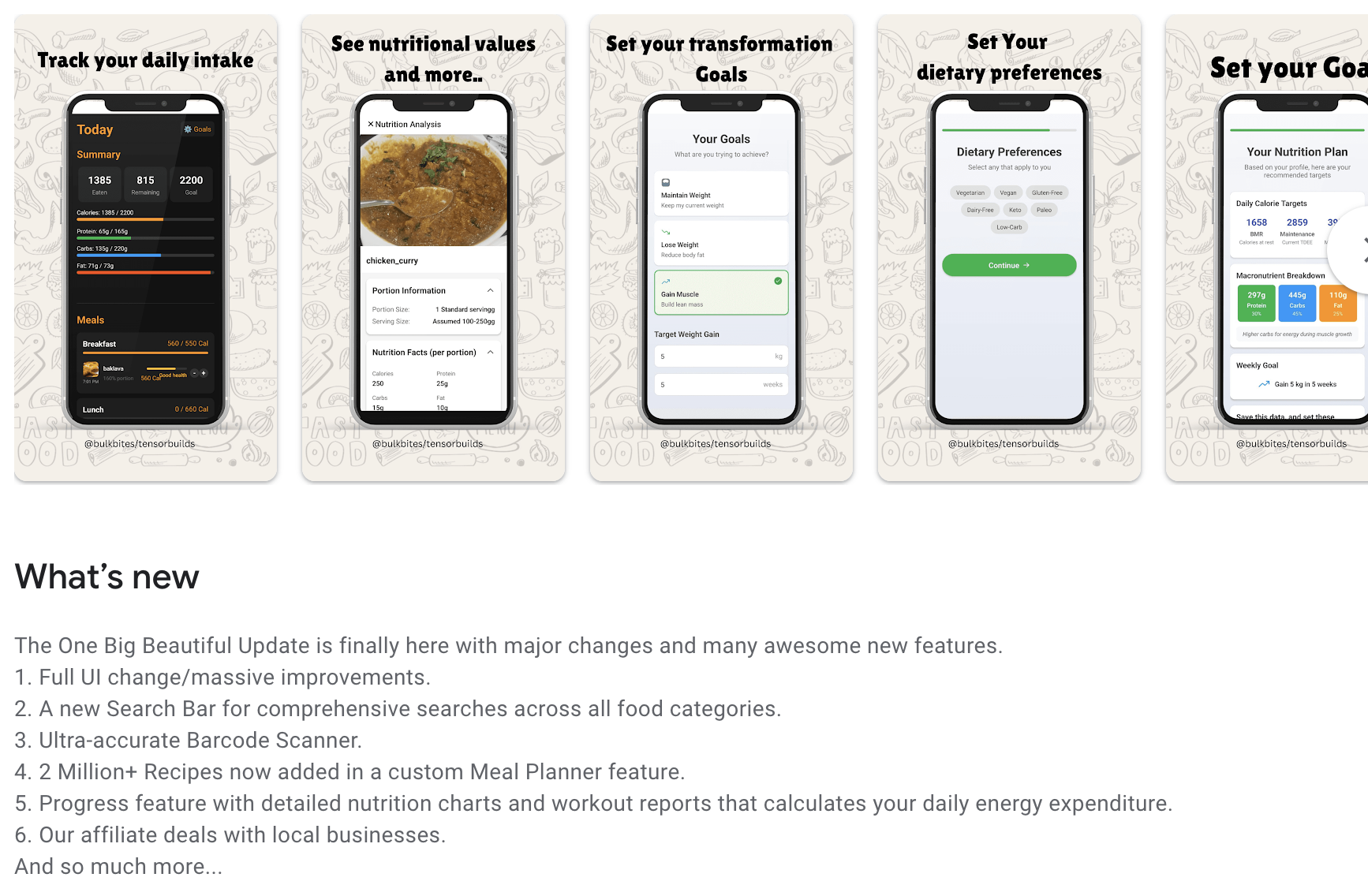
Finally, around March 2025, I finally decided that a startup should find one particular niche ( one star product) and commit to it without wavering.This is when we finalized an AI-powered calorie tracker app as our star product on which to fully focus, discarding all other ideas and previous projects.
This gave rise to Bulkbites, a project I am really proud of.
The following is how I aggressively marketed the app everywhere. I used all channels of advertisement: Instagram, youtube, etc.
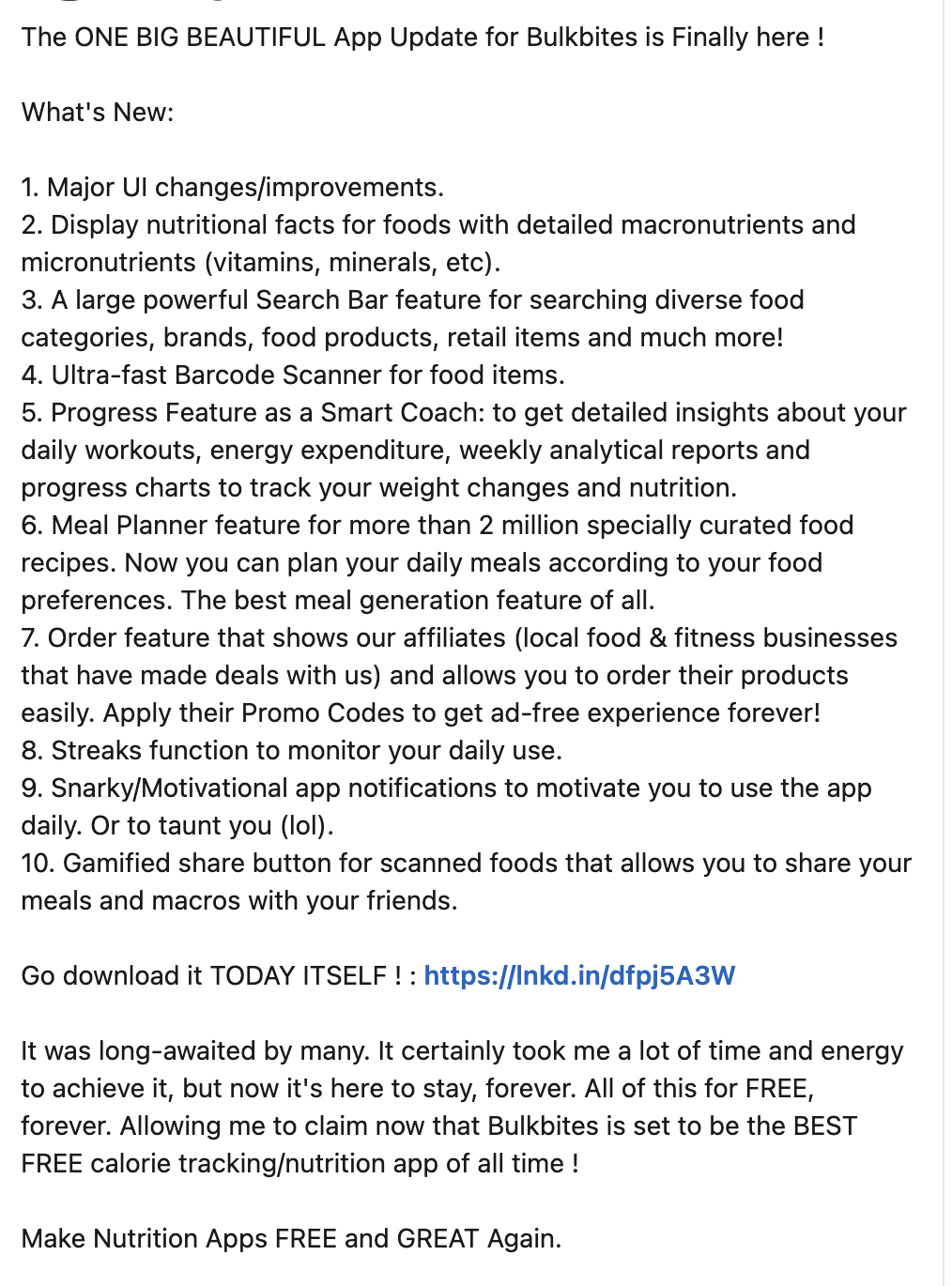
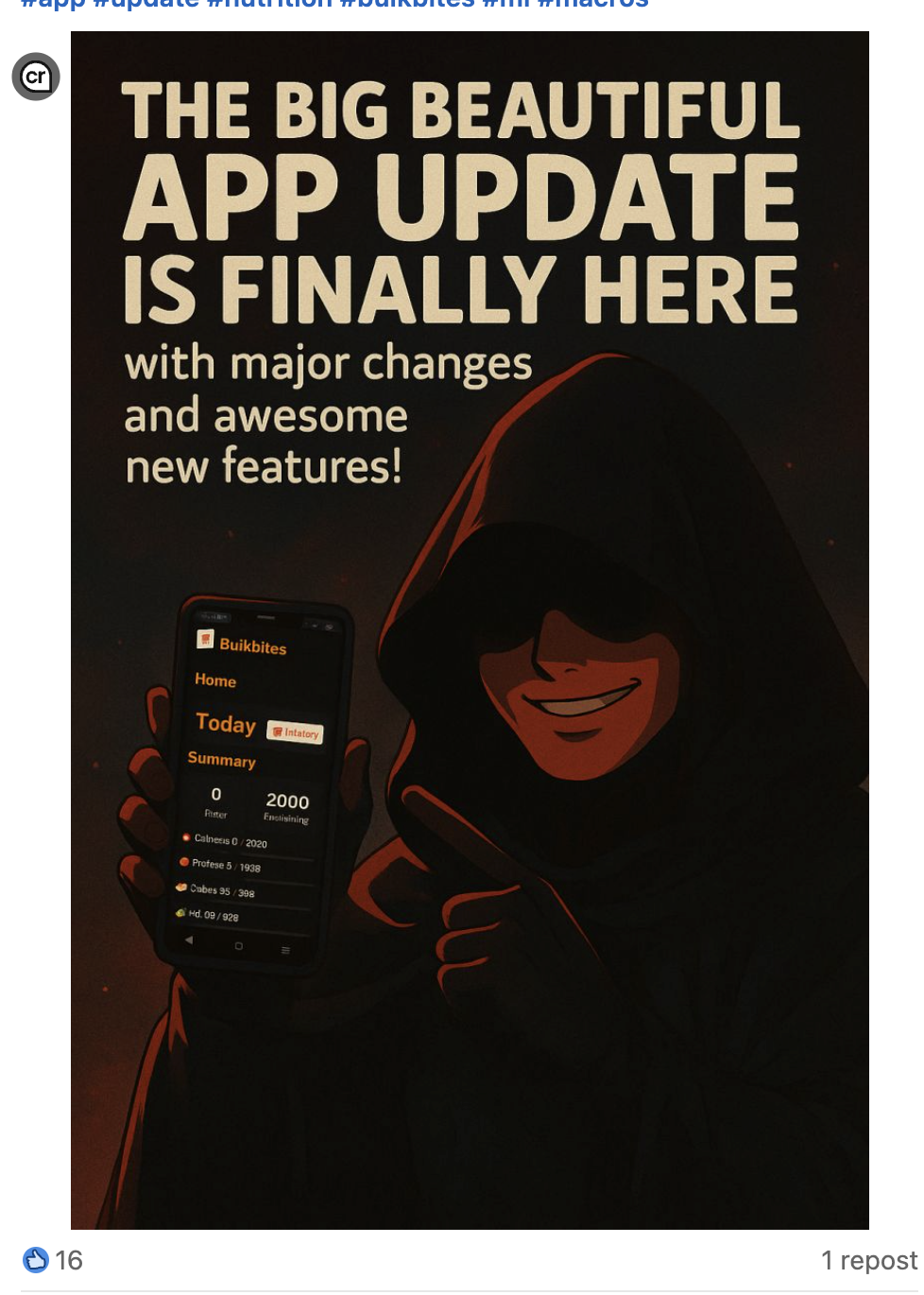
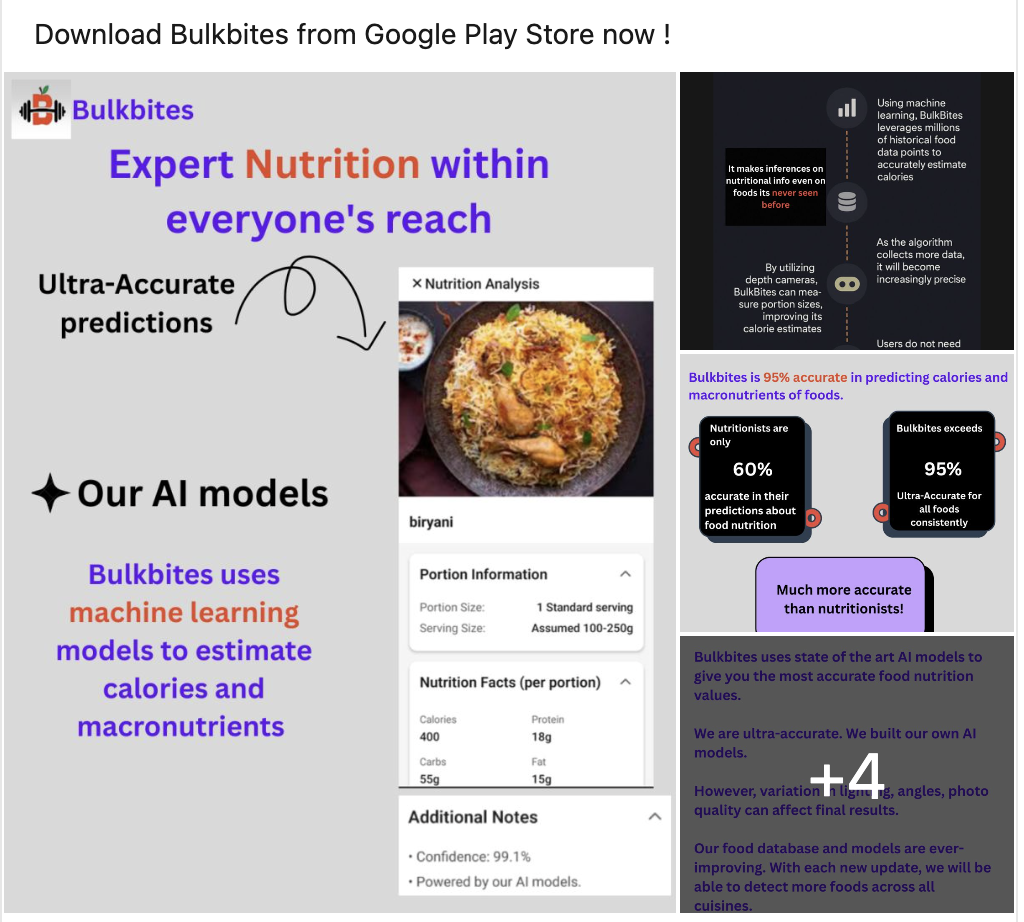
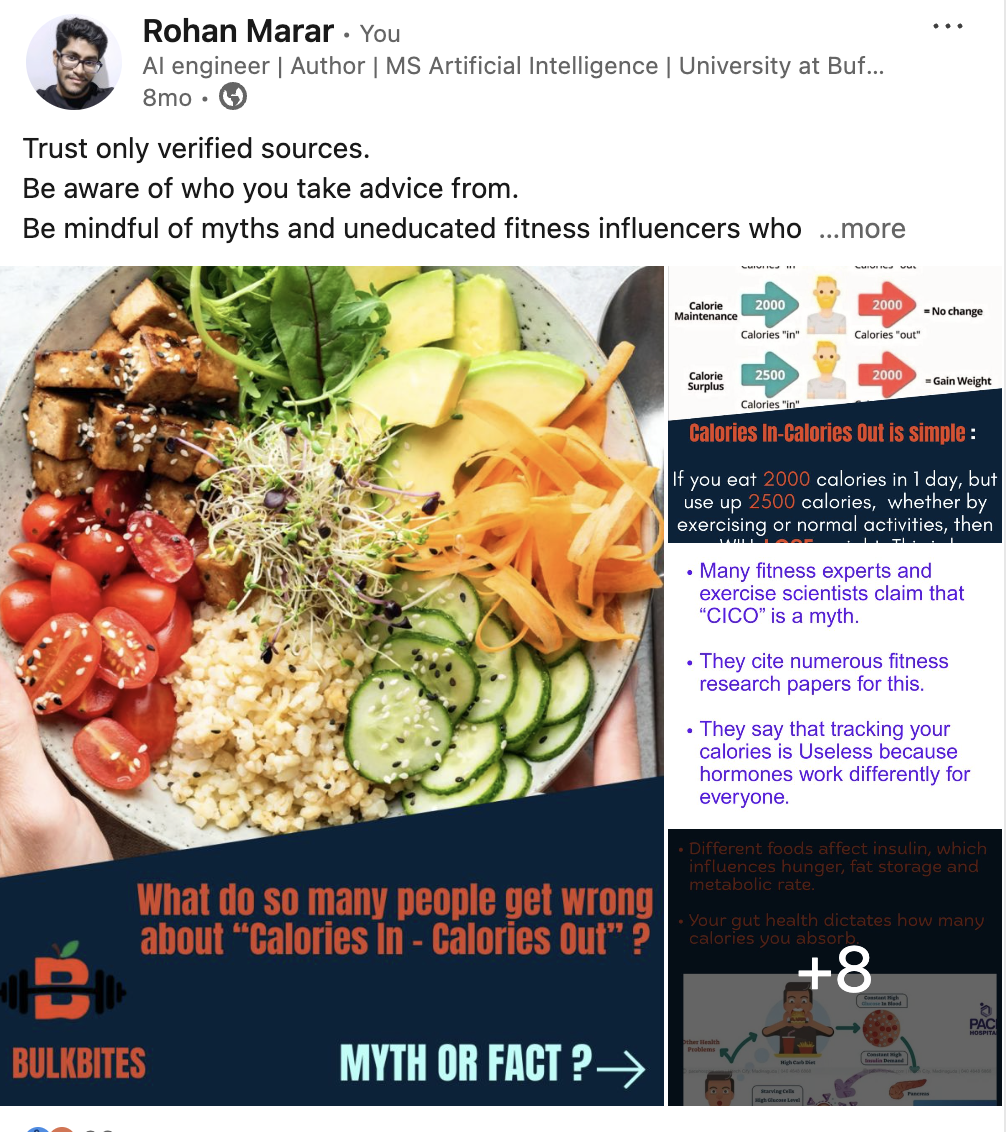
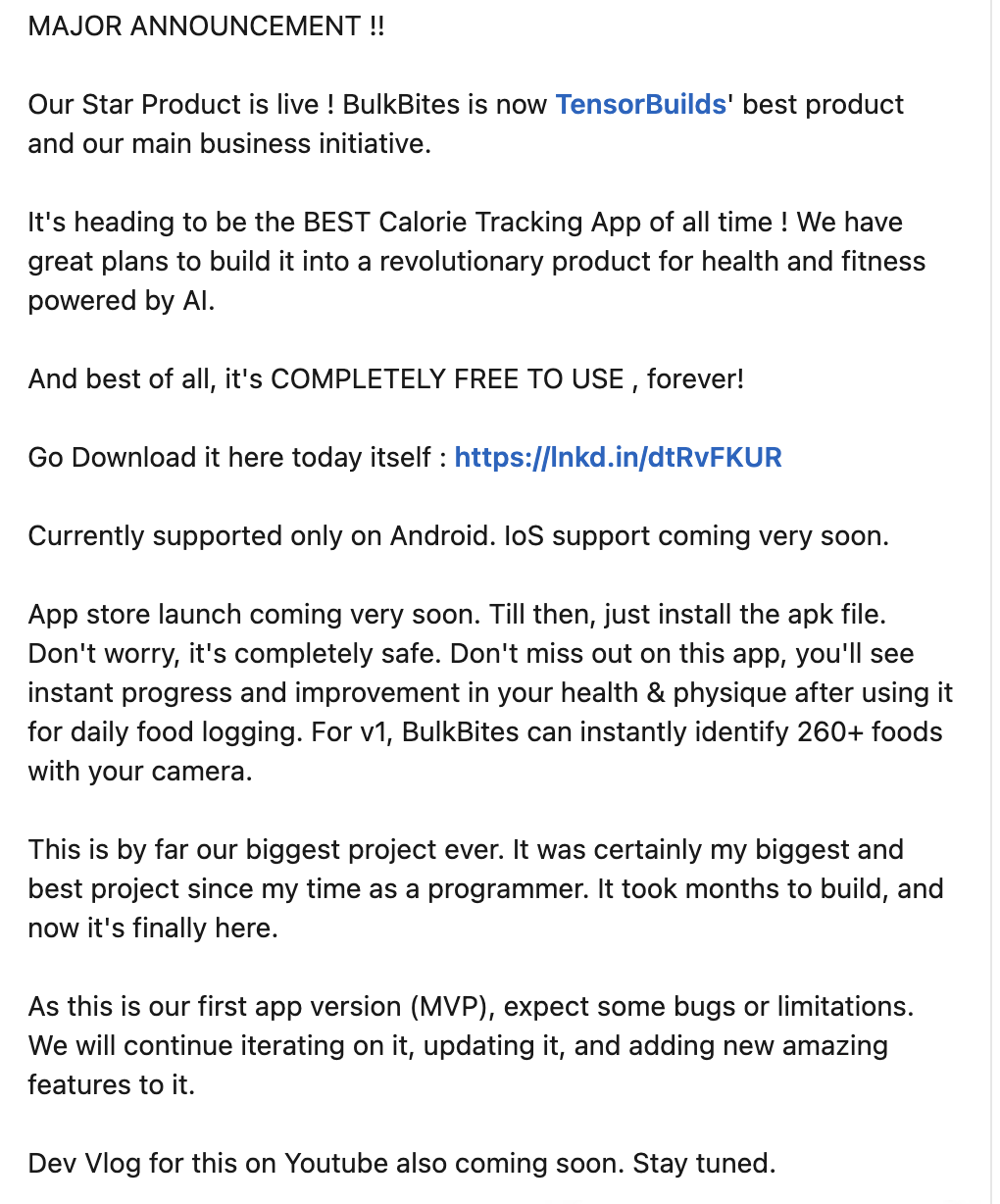
This is a youtube video on how I pivoted my startup and built an AI-powered calorie tracker app for Android. I marketed this app with a number of different approaches, such as online social media marketing, email outreach, collaborating with my hometown’s local food businesses as a new tactic of mutual marketing( in B2B format), and much more.
The following is a presentation on entrepreneurship I gave to my classmates back in my undergrad college days.They wanted to know more about my first unofficial startup’s tactics, ways I implemented my products and marketing, and so on. It sums up everything I have learned from building and running a college startup.
When it was time to finally quit and move on, I was ready to say goodbye. I had no bitter feelings, I knew I had done everything in my power to keep trying. Even though my startup came to no fruition, I have zero regrets, and I would change nothing about what I did, because all those days spent coding and marketing my apps taught me more things than any of my teachers in India ever could.
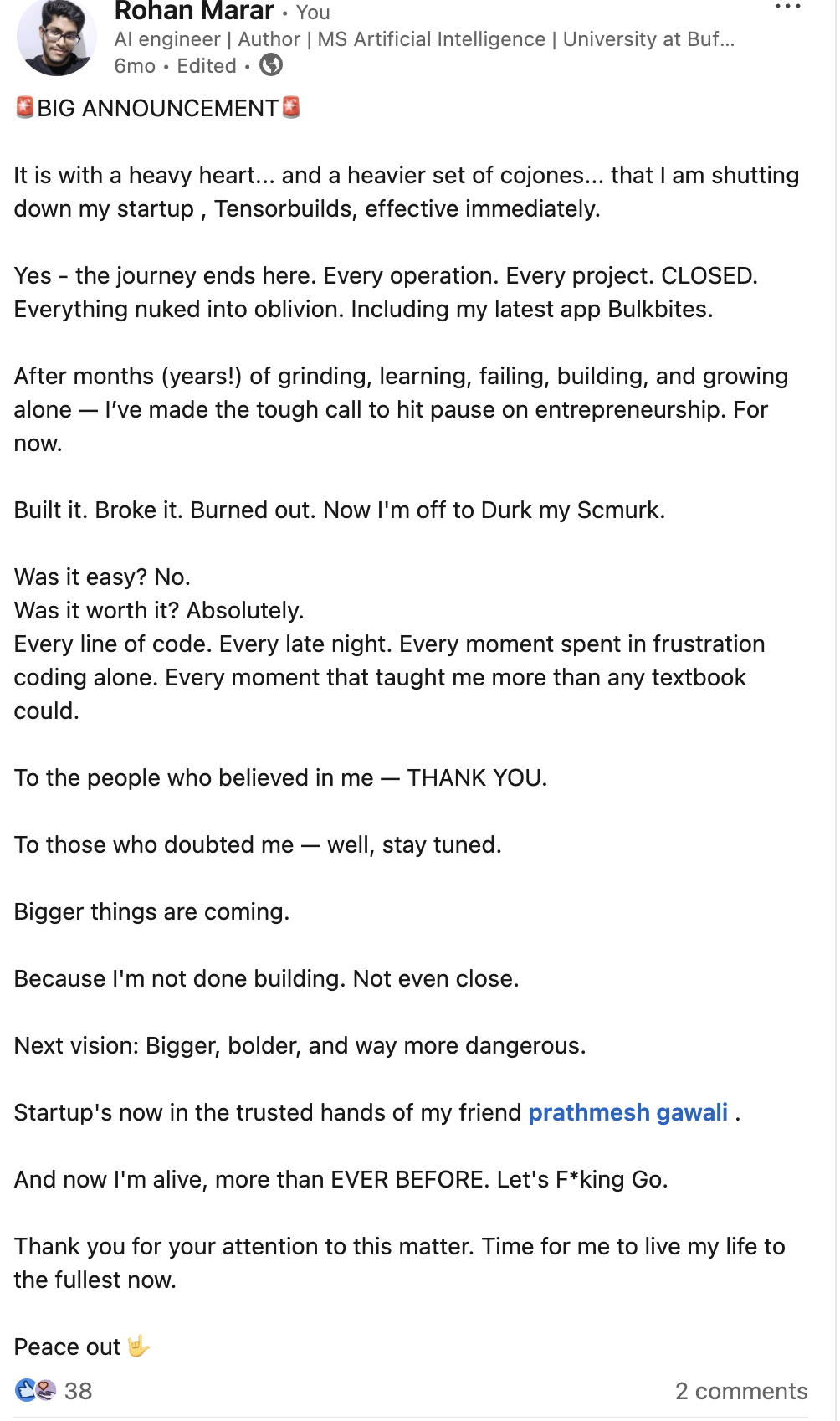
This is the post I posted when I finally left working on my startup, and gave up all my access to app control and all my code files to my co-founder so that he can continue building it while I travel to USA.
There’s a character from the anime One Piece, who is kind of like a mentor to a character named Franky. This character is a boatmaker who loves building ships, be it a travel ship, pirate ship, or a warship. When disaster strikes and people die because of a boat that Franky builds, Franky starts criticizing his invention. The mentor holds him in contempt and tells him a powerful lesson, which all people interested in entrepreneurship must remember, and I’m paraphrasing here : ” It does not matter if what you build is a good thing or not, or if it positively or negatively affects other people. As an inventor, what matters is the act of invention itself, which must be free of any morality or human sins, and must involve only the joy one feels when one build something new and valuable. ” He said this in the context of shipbuilding, but you get the idea.
There’s a youtuber and fitness(or more accurately, a lifestyle and mindset) influencer, Togi, whose mentality applies well to a business owner. While he is a degenerate gambler and steroid glorifier, he has his moments of enlightenment when he shares some solid advice on how someone ahould approach society, and in general ,life. He says that, public opinion is worthless. Caring about what other people think about you is worthless. And these are words to live by. There are countless students who graduate as engineers and go to work for big corporations where all their ambitions and dreams are sucked right out of them ,turning them into mindless slaves stuck in a perpetual rat race, just becuase they care about what society thinks about them. This is an employee mindset. They lack the inner confidence to challenge other people. They forget that, behind every powerful corporation, legal entity, government,or country, there are people just like them who are making decisions that directly or indirectly affect their lives, forcing them to be controlled by the opinions and rules imposed by other people. What matters is that you must break out of this cycle ( essentially the matrix), take your life in your own hands, and build stuff for yourself. Why Zuckerberg? Why not you? You have everything in your power, to change your life, pursue things you love, and get paid for it eventually.
I have realized that pursuing something you love is what matters the most, but in a way that positively creates something valuable in the marketplace that others find valuable. It’s no use following something you love if you cannot get paid for it, or if no one else finds it worthwhile, or if it’s something obscure. No one will value you if you love coding in, say, assembly language, because the market does not put a strong value on such a skill. Hence, what matters is that, if you are someone who wants to build new stuff and get paid for it, find an intersection of something you love, and something that other people will readily pay you money for. That will drive your progress through the roof, via powerful ways like equity, royalties, passive income, etc.